How to Use a Free City State US Domain for Startup Branding and Local SEO
Senior engineers building AI software in San Francisco & Lahore
A CTO-focused guide on how to use a free city state us domain for startup branding and local seo without creating DNS, trust, or migration risk.
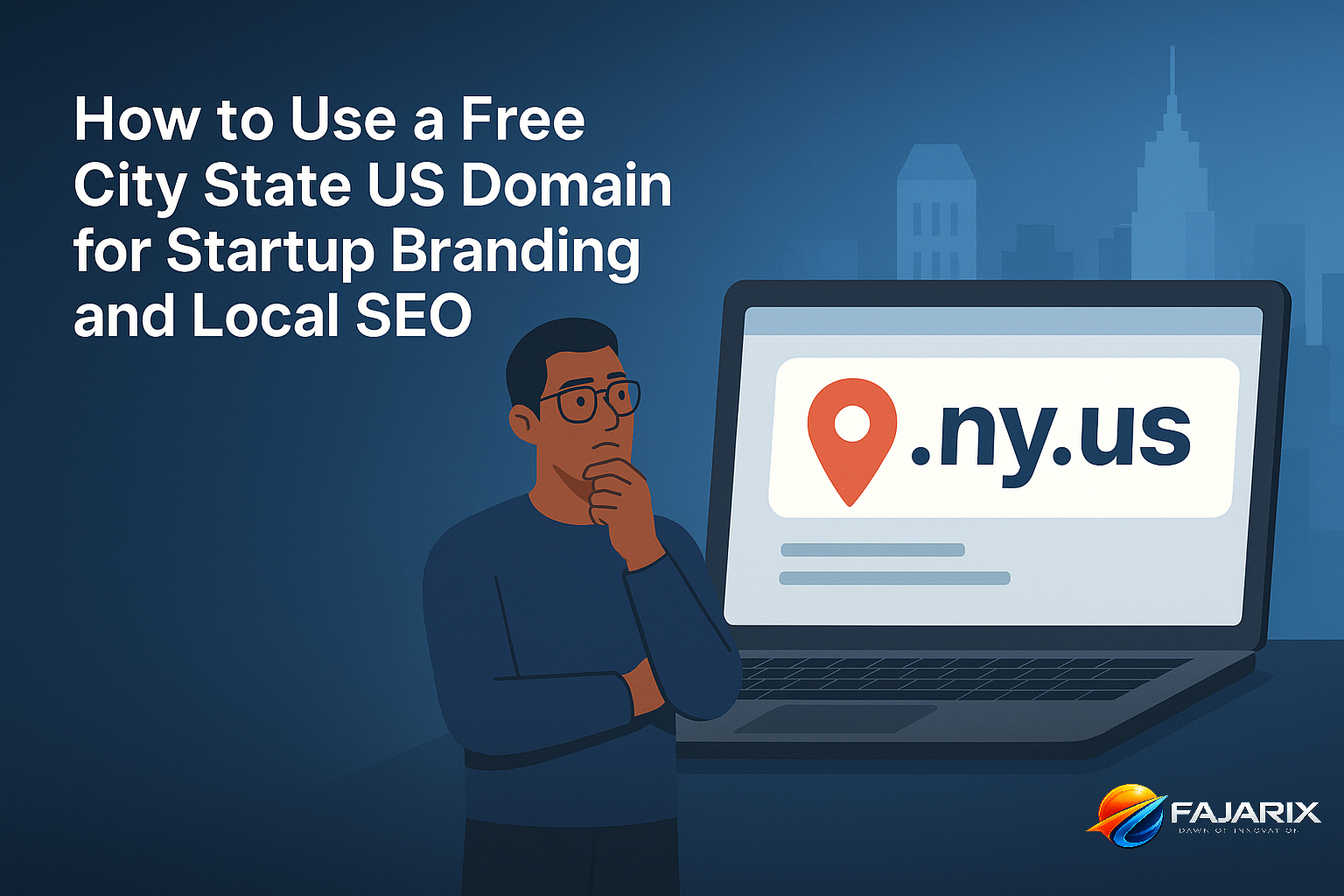
How to use a free city state us domain for startup branding and local seo is the process of evaluating whether a no-cost *.city.state.us locality domain improves local discoverability and civic trust enough to justify its operational constraints. In practice, that means weighing branding, DNS control, registrar responsiveness, security posture, and future migration risk before you build anything important on it.
For a founder or CTO, the interesting question is not whether you can get one. You often can. The real question is whether a free locality domain should be your primary identity, a campaign microsite, or something you avoid entirely.
This guide assumes you already understand domains, DNS, and web delivery. What you likely do not have is a practical framework for deciding when a locality domain is strategically useful in 2025 and when it becomes a hidden liability for your engineering team.
When Is How to Use a Free City State US Domain for Startup Branding and Local SEO Actually a Good Idea?
Short answer: it is a good idea when the locality itself is part of the product’s trust model, acquisition channel, or public mission. It is usually a bad idea when you need clean national branding, investor-facing polish, or predictable registrar operations.
The strongest use cases we see are:
- Civic-tech pilots tied to one municipality or neighborhood
- Local directories, chambers, business alliances, and community portals
- Service businesses where geography drives conversion more than brand abstraction
- Public-interest projects that benefit from visibly local naming
- Temporary initiatives such as events, grants, local incubators, or neighborhood programs
The weakest use cases are venture-backed SaaS products, multi-city marketplaces, and startups planning to expand outside one locality within 6 to 18 months. In those cases, the domain can signal unnecessary narrowness and create future migration work.
A free domain is rarely free in engineering terms. If registration is manual, DNS delegation is awkward, and support is slow, your real cost appears later as migration, incident response, and lost trust.
What Makes a Locality Domain Valuable
A locality domain can increase perceived legitimacy for highly local work. If you operate a neighborhood data portal, local volunteer platform, or city-specific small-business service, a domain like project.city.state.us can communicate relevance faster than a generic .com nobody recognizes.
It can also help with local SEO indirectly. Not because Google gives locality domains magical ranking power, but because users may click them more readily for location-specific intent, and because the domain reinforces local entity signals when paired with consistent business profiles, citations, schema markup, and localized content.
What Makes It Risky
The source article correctly notes the process is manual and delegation varies by locality. From an engineering leadership perspective, that means you are depending on a fragmented registration model, outdated contact information, and support processes that may not meet modern expectations for uptime-sensitive businesses.
That is not a minor inconvenience. It affects domain recovery, nameserver changes, incident handling, and your ability to move quickly during a rebrand, acquisition, or security event.
Is a Free City State US Domain Worth It for Startups?
Usually only as a secondary asset. If you are a startup, how to use a free city state us domain for startup branding and local seo should usually mean using it as a redirect, local landing page, or campaign property rather than your canonical brand domain.
In most startup cases, the best pattern is:
- Buy a portable primary domain such as
.com,.co, or a strong country-neutral alternative. - Register the free locality domain if available.
- Use the locality domain for geo-targeted pages, redirects, or trust-building campaigns.
- Keep email, auth, API endpoints, and core product URLs on the primary domain.
That approach preserves flexibility. If the locality domain becomes unavailable, delayed, or operationally painful, you lose a marketing asset, not your company’s identity layer.
A CTO Decision Rule We Use at Fajarix
If a domain change would break any of the following, do not make the locality domain primary: customer login, transactional email, API integrations, mobile deep links, or B2B procurement documents. Those systems are expensive to unwind.
In our product engineering work, we treat domains as infrastructure, not just branding. The more systems a domain touches, the more conservative you should be about putting them on a manually managed locality namespace.
How Does Registration and DNS Setup Work in 2025?
At a high level: find whether your locality is delegated, identify the delegated manager, prepare nameservers in advance, submit the required template, wait for manual approval, then configure DNS records with your hosting platform.
The source walkthrough is useful, but senior teams should add a few controls before proceeding.
Practical Registration Flow
- Confirm delegation status. Verify whether your target locality is delegated and who currently handles requests. Expect stale records and outdated contacts.
- Create nameservers first. Services such as
AWS Lightsail,Cloudflarein partial setups, or other DNS providers may help, but locality registrations often require explicit nameserver details up front. - Prepare operational ownership. Use a role account like
domains@company.com, not a founder’s personal inbox. - Submit the template carefully. Keep an internal copy in your password manager or infrastructure repo.
- Track the request. Set reminders. Manual registration can take days or weeks.
- Add DNS records conservatively. Start with web redirects or a simple landing page before attaching email or critical services.
Tools That Fit This Workflow
Named tools matter because support quality varies. Teams we advise commonly use AWS Lightsail or Route 53 for DNS, Cloudflare for edge protection and redirects, GitHub Pages or Vercel for static landing pages, and Google Workspace or Microsoft 365 for mail on the primary domain only.
If you are building a local portal or directory, pair the domain with disciplined web development choices: canonical tags, location schema, server-side redirects, and analytics segmented by geo-intent.
What the Original How-To Understates
The original guide focuses on successful setup. What it understates is the bus factor. If one registrar contact goes quiet, or a delegated manager changes organizations, your domain operations may stall. A domain that depends on institutional memory is not equivalent to a domain managed through a modern registrar dashboard.
That does not make locality domains unusable. It means you should classify them as higher-friction assets and design your stack accordingly.
What Are the Branding, Trust, and SEO Trade-Offs?
The trade-off is simple: locality domains can increase local relevance while decreasing brand portability. How to use a free city state us domain for startup branding and local seo depends on whether local trust matters more than long-term scale.
| Factor | Free Locality Domain | Standard Commercial Domain |
|---|---|---|
| Upfront Cost | Usually free | Usually $10-$30/year |
| Registration Speed | Manual, variable | Usually instant |
| Brand Portability | Low to medium | High |
| Local Trust Signal | High in some contexts | Depends on brand |
| DNS/Registrar Control | Often limited or indirect | High |
| Email Reliability as Primary | Not recommended | Recommended |
| SEO Benefit | Indirect, contextual | Neutral but flexible |
| Migration Risk | Higher | Lower |
Local SEO Reality in 2025
Google does not rank a site well just because the domain looks local. Rankings still depend on content quality, internal linking, page experience, backlinks, entity consistency, and local business signals. A locality domain is a supporting signal, not a shortcut.
If your plan for how to use a free city state us domain for startup branding and local seo is “register the domain and rank,” that plan will fail. If your plan is “align domain, on-page location intent, Google Business Profile, citations, local backlinks, and service pages,” then the domain can help reinforce a coherent local presence.
Branding Reality Founders Often Miss
Investors, enterprise buyers, and out-of-region hires may read a locality domain as either civic credibility or small-scale constraint. That interpretation depends on your business model. A neighborhood permitting tool benefits from that framing. A vertical SaaS platform probably does not.
For startup MVP development, we often recommend testing local demand with a locality landing page while keeping the main product brand on a portable domain. That gives you signal without committing your entire identity.
What Security and Operational Mistakes Should You Avoid?
Do not use the locality domain as your single point of failure. The biggest mistakes are making it your primary email domain, tying authentication to it too early, and assuming registrar operations will be as smooth as mainstream providers.
- Do not put executive email on it first. Keep mail on your primary commercial domain until you understand support responsiveness.
- Do not bind production auth too early. Avoid using it for SSO, password resets, or OAuth callback URLs in phase one.
- Do not skip DNS documentation. Store nameserver, zone, and contact data in your runbooks.
- Do not ignore DNSSEC and redirect hygiene. If unsupported or awkward, reduce the domain’s scope.
- Do not assume transfer portability. Design as if migration may be manual and slow.
Fajarix Perspective: The Hidden Cost Is Not Registration, It Is Change Management
This is where our view differs from most hobbyist guides. In production environments, the painful moment is not day one setup. It is month 14, when you need to change DNS during a vendor migration, launch a mobile app with universal links, rotate email infrastructure, or respond to a spoofing incident.
Teams in Pakistan working with US clients often see this clearly because we inherit systems after the original builder is gone. When domain ownership is tied to a person, a legacy inbox, or a semi-manual registrar relationship, recovery becomes a business risk. That is why we advise clients to separate brand experiments from core infrastructure domains.
Common Misconceptions
Misconception 1: Free means low-risk. It only means low purchase cost.
Misconception 2: Locality domains are inherently better for SEO. They are not. They may improve relevance signals and click trust in narrow contexts.
Misconception 3: If WHOIS is limited, privacy is solved. Privacy is only one part of domain security. Access control, inbox ownership, and DNS governance matter more.
How to Use a Free City State US Domain for Startup Branding and Local SEO Without Locking Yourself In?
Use it as a layered asset, not your foundation. The safest strategy for how to use a free city state us domain for startup branding and local seo is to make it a public-facing local signal while keeping your durable systems on a separate primary domain.
The Best-Practice Architecture
- Primary domain: company brand, email, app, API, auth, contracts
- Locality domain: redirect, local campaign page, directory, civic initiative, event microsite
- Hosting: static-first where possible using
Vercel,Netlify, orGitHub Pages - Protection:
Cloudflarefor CDN, WAF, and redirect rules where compatible - Observability: uptime checks, DNS record inventory, owner runbook
This setup gives you the upside of local trust with limited downside if the domain becomes cumbersome later.
A Simple Decision Framework
Answer these five questions:
- Will this product still be local in 24 months?
- Would a domain migration materially hurt revenue or retention?
- Do we control a stable operational inbox and DNS process?
- Does local trust outweigh national brand portability?
- Can we keep email, auth, and APIs off this domain?
If you answer yes to 4 or 5, the locality domain is probably a useful secondary asset. If you answer no to 2 or more, do not make it central.
Should Civic-Tech Teams and Local Businesses Use One?
Often yes, with guardrails. Civic-tech teams, neighborhood organizations, and local service businesses are the strongest candidates because the domain itself communicates jurisdiction, community alignment, and local relevance.
For these teams, how to use a free city state us domain for startup branding and local seo can be practical and effective if they keep the site simple, the ownership documented, and the critical systems elsewhere. A local information portal, reporting tool, or public resource hub can benefit meaningfully from the domain’s context.
Where It Fits Especially Well
- 311-style issue reporting pilots
- Neighborhood association portals
- Local grant, event, or volunteer programs
- Small business alliances and district directories
- Location-specific landing pages for AI automation or service delivery pilots run with city partners
Where It Usually Does Not
- VC-backed SaaS with national ambitions
- Products expecting acquisition or rapid rebrand
- Apps with heavy mobile deep-link dependencies
- Businesses needing enterprise-grade domain operations from day one
One more practical point: if your team is non-US but your customer base is US-local, verify nexus and registration eligibility carefully. Engineering can build around many constraints, but not around a domain you were never entitled to hold.
Recommended Action Plan for 2025
If you are evaluating how to use a free city state us domain for startup branding and local seo, here is the shortest sensible path:
- Buy a primary commercial domain first.
- Check whether your locality domain is delegated and reachable.
- Register the locality domain only if it supports a clear local trust or acquisition goal.
- Use it first for redirects or a static local landing page.
- Keep email, auth, APIs, and mobile app links on the primary domain.
- Document nameservers, contacts, and recovery steps.
- Review in 6 months whether the domain is helping conversion, CTR, or partnerships.
The source article shows that setup is possible. The strategic takeaway is narrower: possible is not the same as wise as a primary domain. Treat locality domains as useful but constrained assets, and they can serve you well.
Ready to put these insights into practice? The team at Fajarix builds exactly these solutions. Book a free consultation to discuss your project.
Ready to build something like this?
Talk to Fajarix →